
Design System

Governance

A 12-week audit, adoption study, and governance recommendation for the Fannie Mae Blueprint Design System.

Services

Design System audit
Dystem system operations
Workshops
strategy
Presentation
User Adoption

Industry

Government Mortgages

Timeline

12 weeks

Client

fannie mae

MY ROLE

UX & Design SYSTEM Lead

The Story
I was brought in as Lead to audit the Design System and guide operations. Two separate design systems between the Creative and engineering departments created confusion and rework.
The Mission
Conduct an objective audit and define a scalable model for quality, production, and adoption. Understand the workflow, gaps, and where we could align Design System operations and governance
What I did
Interview team, audit design system components, workflow, documentation, workshops, test collaboration, compare and contrast and strategize, present solutions for an new operating roadmap.
Outcome
Leadership accepted our recommended model of the 3 presented  operational solutions. Design System standardization. Fannie Mae forecasted a 22% increase in efficiency across product work.

In -Depth Audits Revealed

Surprising results! No,  not really, we had suspected what we found that ADK the engineering team had a well baked component token system. We did not expect to find that the design Blue print side was struggling to get their work implemented - It was an necessary struggle. We revealed te evidence to the teams.


understanding the conflict

The Struggle was real.

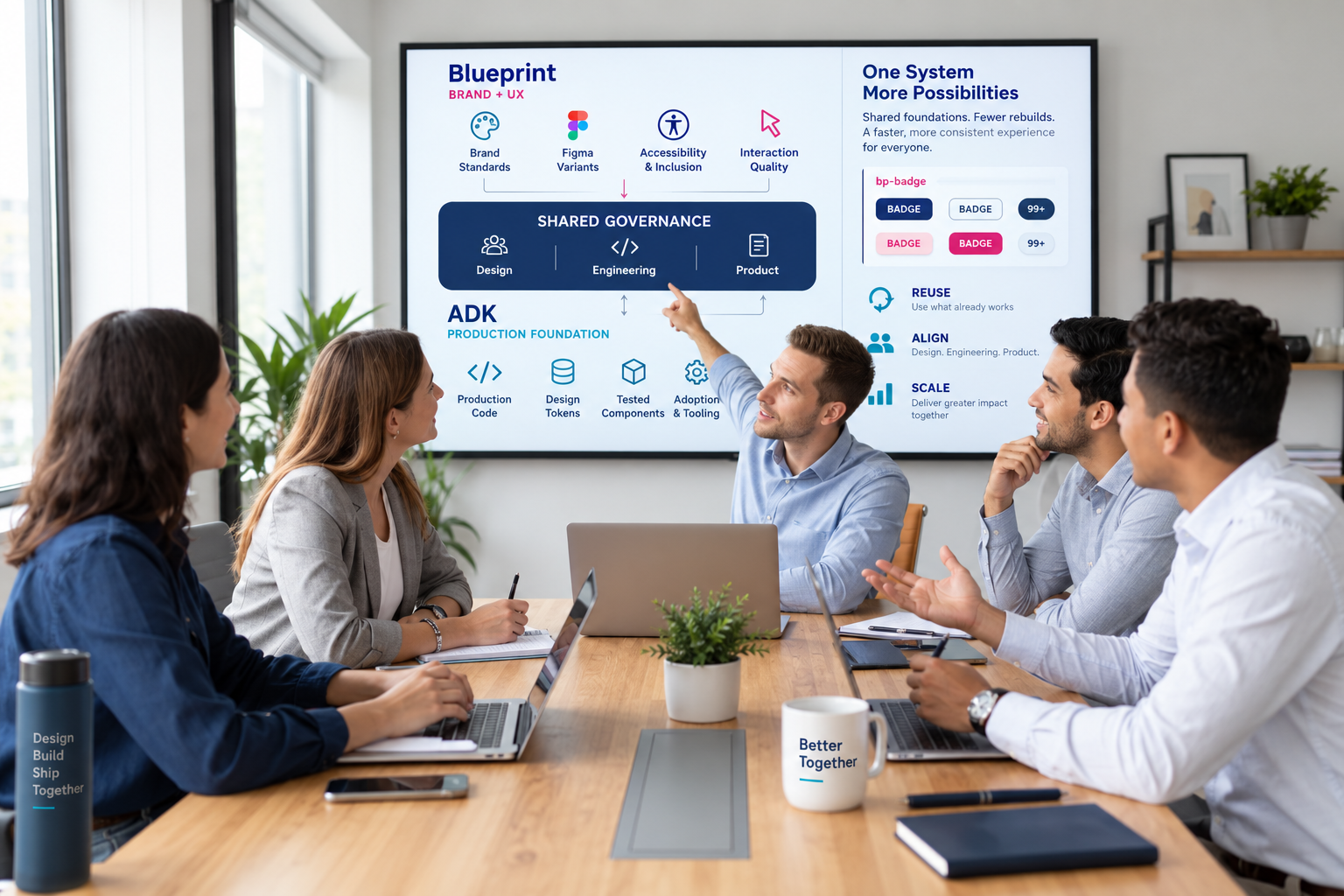
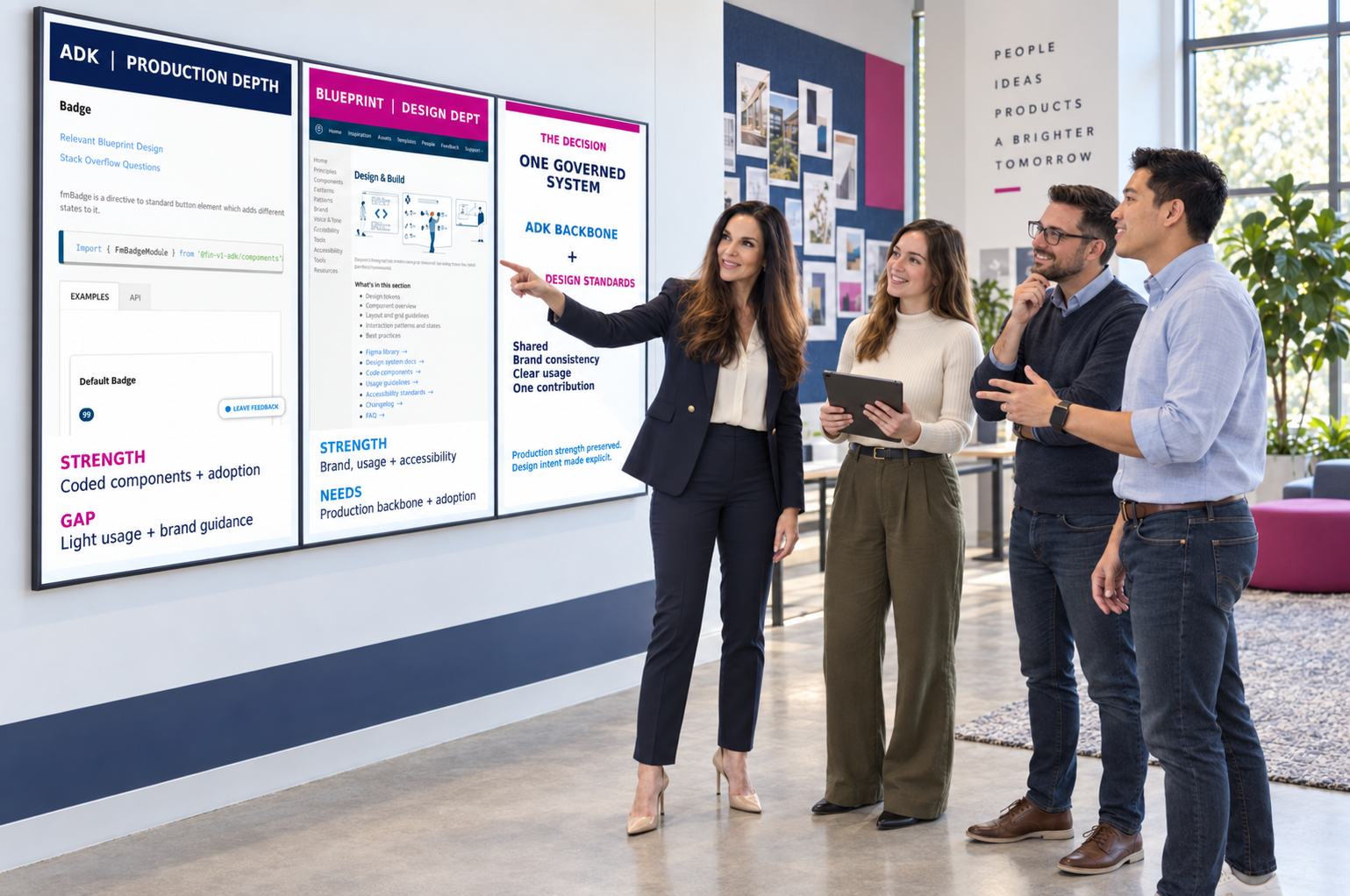
Blueprint protected the brand and design intent. ADK had the stronger production process and the adoption base. Both believed they should govern the system.

Creative + UX

Brand authority, Figma assets, tokens, interaction quality, documentation

ADK + Engineering

Production components, technical documentation, active adoption

Cost if Governance gridlock

Design drift, inconsistent interface, duplicated efforts , delays and rework

discovery & synthesis

Questions and feedback brought people together.

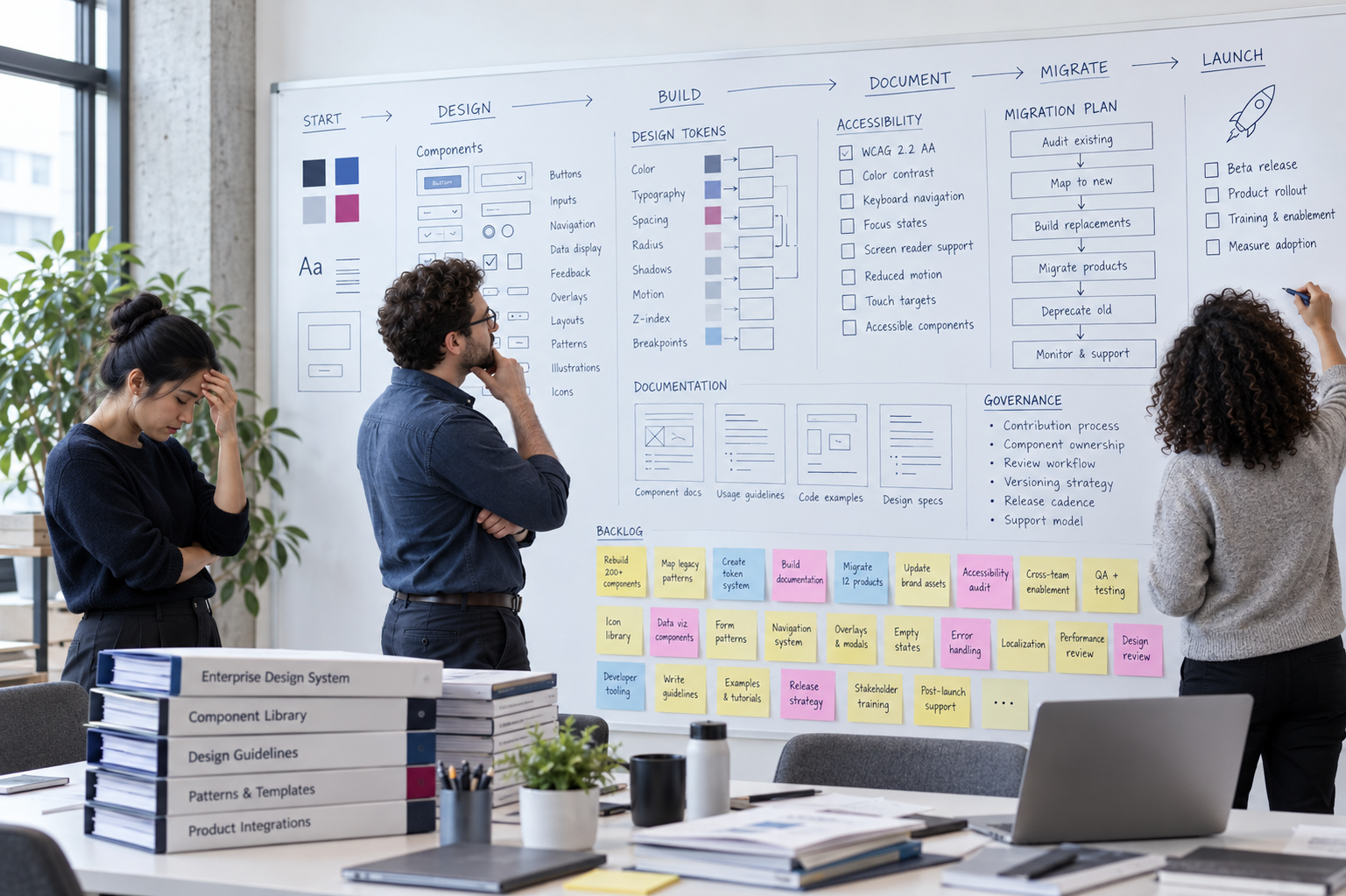
I tailor made interview individual interviews and group interviews based on roles. By asking the questions and giving individuals a voice we would understand their roles, concerns, ideas and fears. I captured engineers and designers, product owners and executive leadership. My internal team and I categorized the more than 200 stickies and brainstorming ideas for solutions.

Ahah moments from  200+ sticky notes

What did all this feedback mean?


  • How could we create "pull" toward collaboration as opposed to "push" by helping both teams see the benefits of one primary governance structure—with clear, meaningful roles for each team—rather than pushing a decision onto them? Although not inclusive some of the benefits  of a clearly defined source of truth for the Design system would include:
  •  Smoother workflows (read efficient defined process)
  • Solid deliveries with reduced rework due to brand issues


  • Where were communication gaps between Blueprint and ADK creating competing decisions, misalignment, and avoidable rework?


  • What evidence should determine the strongest Design System foundation—technical depth, production maturity, adoption, scalability, brand consistency, or delivery efficiency?


  • How could we build on ADK’s stronger technical backbone and adoption while correcting the brand inconsistencies that were generating rework?


  • What roles, decision rights, communication practices, and working cadence would move the teams from competition to accountable collaboration?


These questions helped frame the solutions to determine how the system should operate, scale, and maintain quality creating a positive user experience for the teams creating and using the system.

Evidence

A documentation winner.

ADK pulled in the depth of documentation with their winning component inventory but Blue Print consistently provided the full experience needed along with the branding that successful Design Systems aspire to even with a smaller amount of published pages.


It was clear that the two teams could indeed be complementary to each other providing what the other missed. We just needed to get them to see thst instead of the passion to control the system overriding everything else.

reasoned decisions

Three viable paths.

One defensible decision.

We converted the audit into a decision leaders could act on: preserve what was already working, address the brand and workflow gaps, and create a path to one design system expressed consistently in design and code.

Preserve proven work

Keep mature production components and prior investments.

Reach design-code parity

Create a 1:1 relationship between Figma assets and coded components.

Reduce  friction

Replace siloed handoffs with shared decisions, reviews, and language.

support adoption

Build from the library teams were already using  primarily in production.

Fresh start path

PATH 01

Fresh Start

Rebuild the design system from scratch with a clean foundation, free of legacy constraints and technical debt.

  • Removes accumulated inconsistencies entirely.
  • Gives full control over new standards.
  • Requires the longest rollout timeline.

Why it works: it clears the slate for a system built with no old baggage.

Coordination path

PATH 02

Coordination

Align existing teams and tools around shared processes without replacing the underlying system.

  • Keeps current investments intact.
  • Improves handoffs between design and engineering.
  • Leaves deeper inconsistencies unresolved.

Why it works: it reduces friction fast without touching the foundation.

Collaboration path

RECOMMENDED

Collaboration

Build from the production-ready component foundation while aligning the Figma library, brand expression, and design standards.

  • Preserves active adoption and mature technical work.
  • Creates a shared language between design and engineering.
  • Supports better prototypes, estimation, sprint planning, and reviews.

Why it won: it solved the collaboration failure without recreating the system from zero.

Fresh Start
PATH 01

Fresh Start

Rebuild the design system from scratch with a clean foundation, free of legacy constraints and technical debt.

  • Removes accumulated inconsistencies entirely.
  • Gives full control over new standards.
  • Requires the longest rollout timeline.
Why it works: it clears the slate for a system built with no old baggage.
Coordination
PATH 02

Coordination

Align existing teams and tools around shared processes without replacing the underlying system.

  • Keeps current investments intact.
  • Improves handoffs between design and engineering.
  • Leaves deeper inconsistencies unresolved.
Why it works: it reduces friction fast without touching the foundation.
Collaboration
RECOMMENDED

Collaboration

Build from the production-ready component foundation while aligning the Figma library, brand expression, and design standards.

  • Preserves active adoption and mature technical work.
  • Creates a shared language between design and engineering.
  • Supports better prototypes, estimation, sprint planning, and reviews.
Why it won: it solved the collaboration failure without recreating the system from zero.
What the evidence revealed

Fannie Mae was surprised at the result we suggested. They had fully expected our team to suggest that Blue Print take the governance lead. Once they understood the findings and the benefits and ease of adoption and increases in effiiciency and production than they would ultimately realize they accepted the Collaborative approach.

The problem was not a lack of good work. The strongest work was divided across two systems without one governance model to keep it aligned.