





Experian Health

Building a UX Practice from Zero

Transforming fragmented product teams into a scalable, insight-driven UX operating model.

Services

UX Strategy
Design Operations
Process Design
Team Building
Stakeholder interviews & Workshops
Change Management

Industry

Healthcare Technology

Timeline

2024 (< 6 months)

Client

Experian Health

MY ROLE

Lead UX Strategist

Experian Health is a leading healthcare data and technology company serving hospitals, health systems, and payers across the U.S. Their products span revenue cycle management, care management, patient engagement, and identity management — high-stakes workflows where usability directly affects operational outcomes for hospitals, doctors’ offices, and ultimately patients.


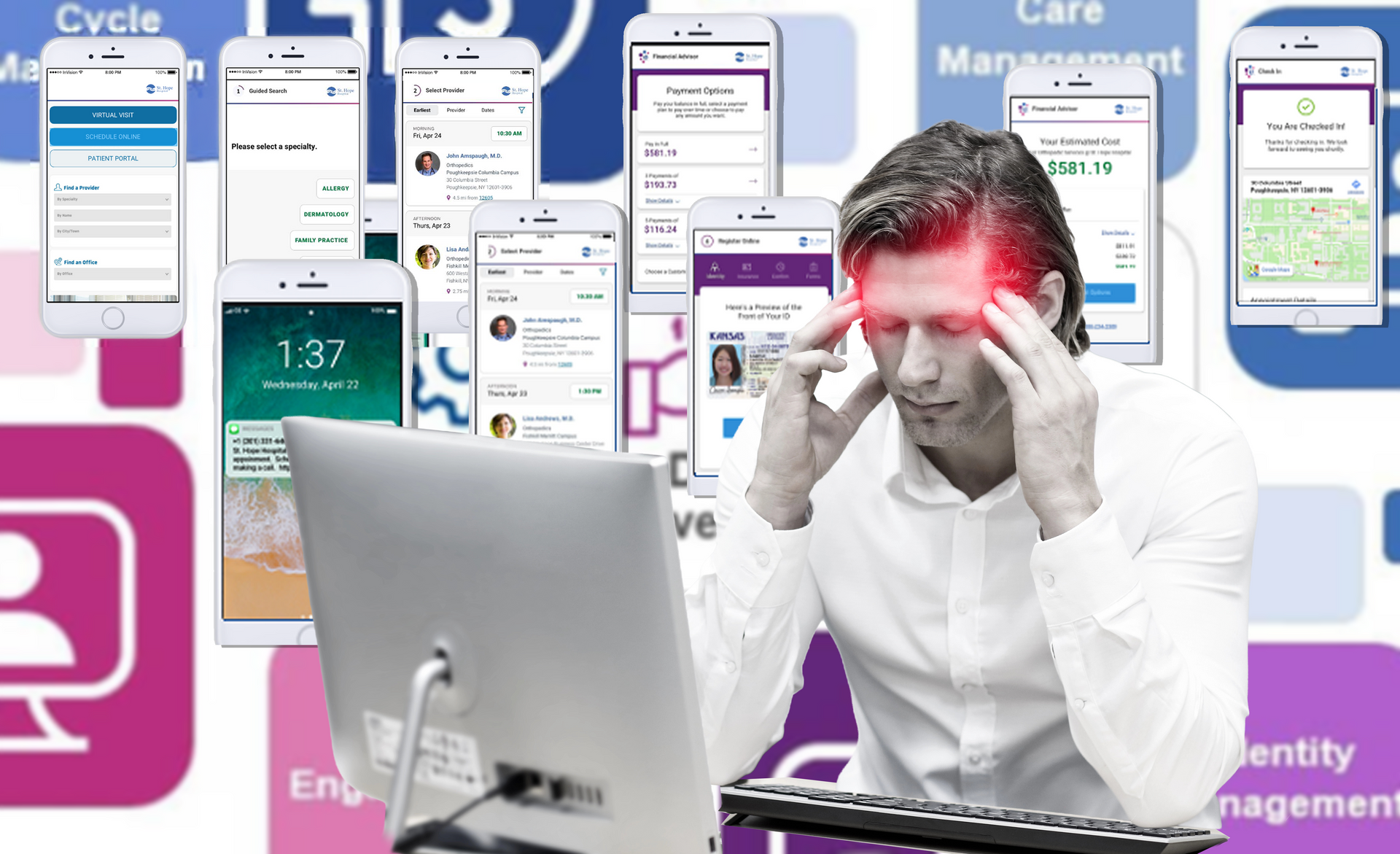
At the time of the project, the UX team consisted of a newly hired UX Director and a UX Manager and one UX designer. Most designs were not vetted through user testing or designers. Product Managers were doing what they could to fulfill UX needs, producing inconsistent design and interfaces that were cumbersome and frustrating to use. This caused rework and was costing Experian money.

Experian Health needed a ready team of UX designers and someone to lead them. I was brought in as a Lead UX Strategist to guide them on building their UX practice to ensure success.


I was responsible for:

•  Diagnosing the current state of UX across the organization

•  Recommending process and how to build a successful UX team practice

•  Creating a backlog of initial design priorities with prioritization and scheduling

•  Delivering detailed guides on how to achieve team success and scalability

•  Guiding the new UX Director and Manager on standing up the department.


This work required navigating complex siloed structures, resistance to change, and an identity shift — not just delivering design artifacts.


Problem Space & Business Opportunity

Experian Health had UX — but no functioning UX practice.


Product Managers had been filling the gap: making design decisions, creating wireframes, and approving UI without formal research, testing, or design review.


The challenge was not about adding headcount.

The real problem was structural — an authority and ownership gap that affected quality, velocity, and morale:


•  PMs were stretched thin — unable to focus on roadmaps and prioritization because they were doing UX work

•  Inconsistent experiences across products serving hospitals, doctors’ offices, and patients

•  No design accountability — decisions were made reactively, not strategically

•  Designers existed but lacked structure, clear ownership, or a seat at the table

•  Complex siloed structures with resistance to change — teams who had never met were making overlapping decisions


The business needed someone to diagnose the gaps, untangle the roles, and deliver a complete playbook for building and scaling a UX practice — without disrupting active delivery.


DISCOVERY

Detailed Workshops & Analysis

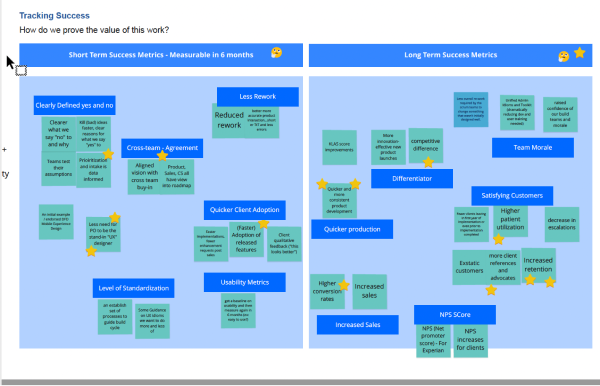
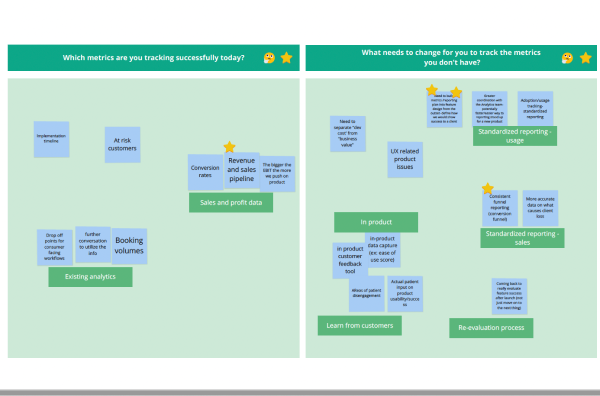
Two structured workshops surfaced the real friction — and brought together people who had never been in the same room. What followed was a synthesis that shaped every recommendation.

Working through the frazzle

We needed the teams and individuals to work together. Most had never collaborated together so it presented an opportunity for us to guide the team with provocative questions and a real working project. This enabled to spot real gaps, real frustrations and start to unravel the silos.


The questions asked UX, POs, engineers across 10 departments to define what success looked like. It was a tough exercise for the Beta Test teams . Next we will go over the results and analysis of this and the discovery workshops.

Workshop Design & Facilitation

Two Beta test teams were gathered based on roles. We used interview feedback to form follow-up questions — with the dual goal of uncovering friction and breaking down silos between product groups that had never collaborated.

Participants were grouped intentionally across product lines. The workshops were structured around four repeating friction areas: role clarity, design authority, communication patterns, and feature decision-making.


What the Industry Data confirmed

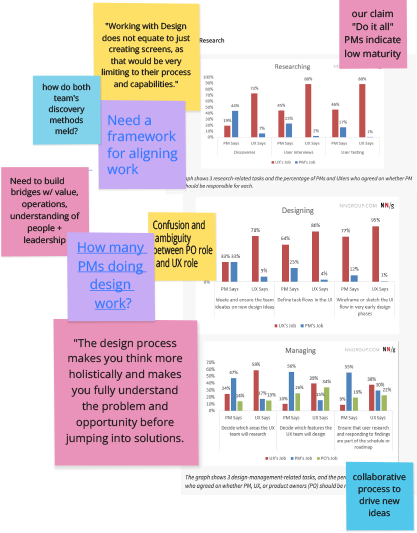
We cross-referenced what we heard with external research on PM/UX role confusion — and found near-perfect alignment. The Experian team wasn't unique in their struggle.  Without governance and collaboration packaged within a process that made sense they would not evolve their application's design succesfully.

Experian had invested in previous research we would draw upon as well from KLAS. This provided a jump start for understanding the overall Health industry need of Experian Health and helped us to map to their mission and clientele expediently.


KLAS Research benchmarks guided outcome alignment — ensuring UX improvements mapped directly to the metrics Experian's hospital and health system clients track and report. Reducing no-show rates, administrative burden, and improving adoption were the north star outcomes.

Industry research  of other operations across enterprises mirrored  the PO/UX roles confusion we were witnessing at Experian . This provided a basis for education about roles and how those  role frameworks could either benefit or hinder application development.

Uncovery - From Complex to Clarity

Discovery & Organizational Research

Discovery & Organizational Research

Rather than arriving with a framework and forcing it, I began with deep organizational research — interviews, workshops, and analysis to understand the starting point and the people involved.


Planning the project

I created 2-week sprint boards to keep us on track, interview guides, Miro workshop boards, and ways of working — all prior to week 1.


Interviews & workshops

I designed interview guides and conducted interviews with the various roles — from the Director to design, development, and POs. I set up interviews, workshops, and an innovative beta testing team to bring together teams and individuals who had never met or communicated.


UX Design Process Cycle

The iterative cycle is aggressive and responsive.


Reviewing your project feature and considering what part of the cycle you are in is a good first step. If you have analayzed that your team is recycling and wasting time in rework instead of moving forward the recommendation is to start over at Review & Alignment.

Quarter Product Flow — end-to-end operating model. Designed to be cyclical and self-correcting quarter over quarter.

Note: Animation made with Sonnet 4.6 Adaptive. After 8 iterations I  humbly accept the small  issues  and enjiy the time savings  and move on.

UX Design Process Cycle

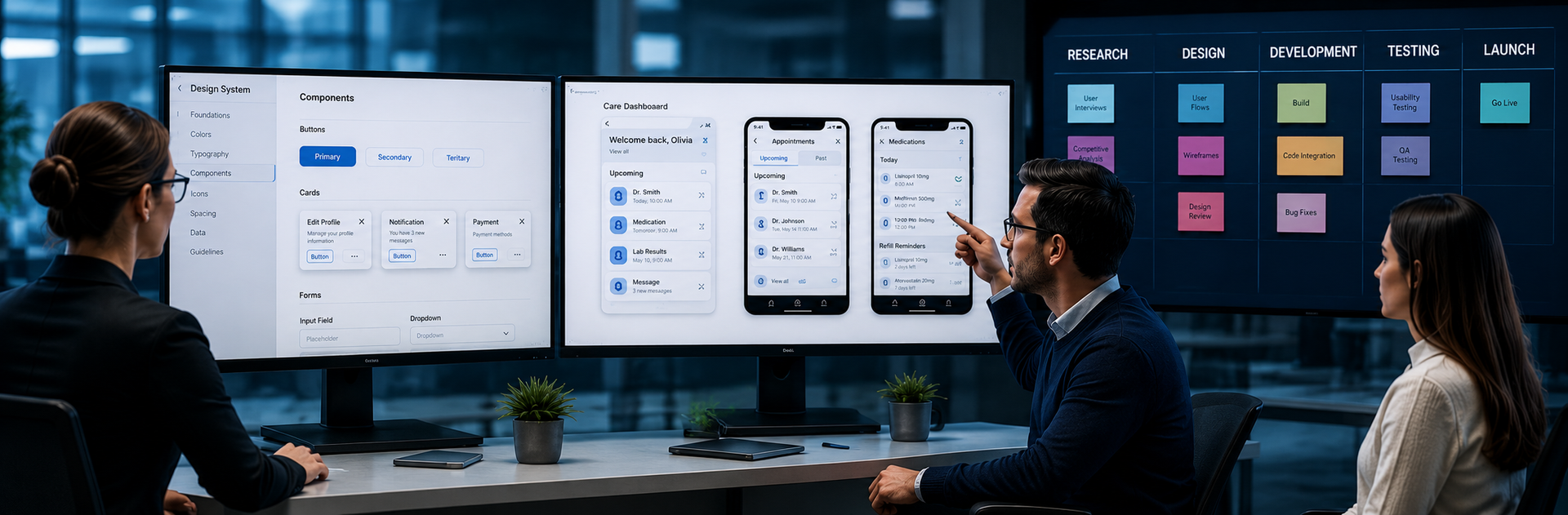
At a glance, a complete operating model — from quarterly planning through development handoff. Built to run without me once the engagement ended.

01

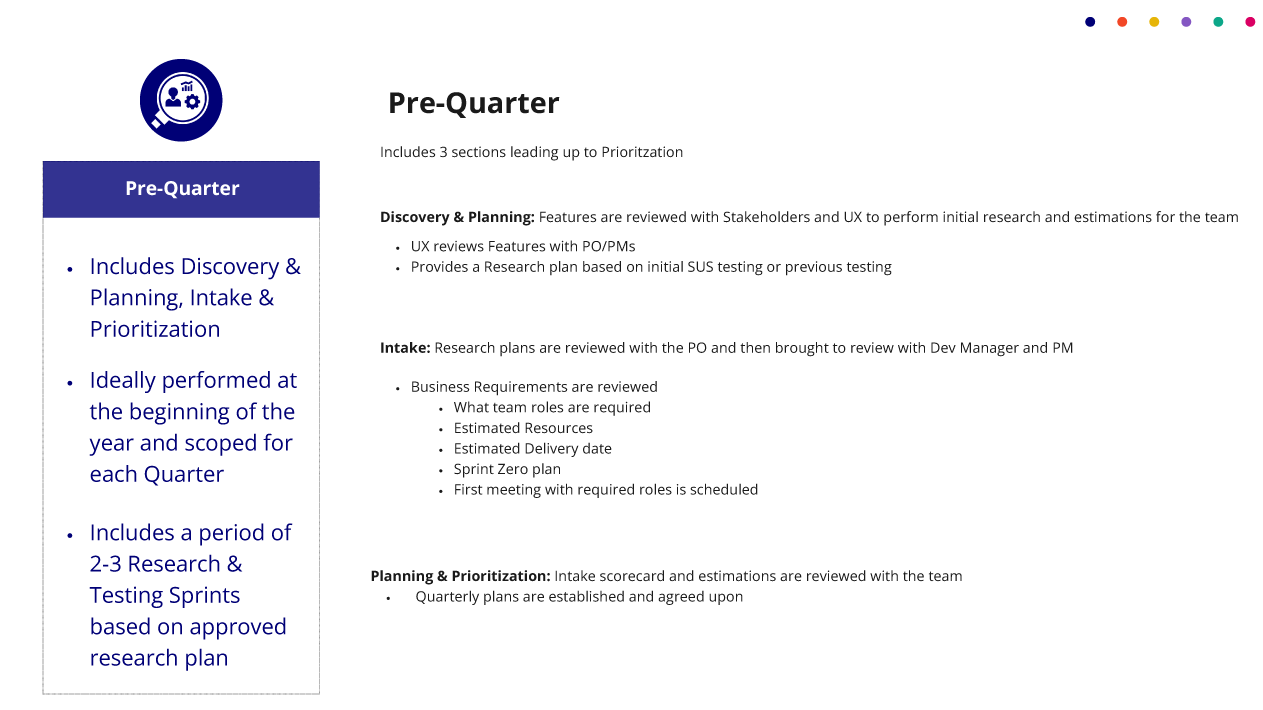
Pre-Quarter Planning

Roadmap alignment, capacity planning, research prioritization, stakeholder mapping.

02

Discovery & Research

User interviews, usability sessions, KLAS benchmark review, synthesis.

03

Design & Testing

Wireframes, prototyping, iteration cycles, beta test facilitation.

04

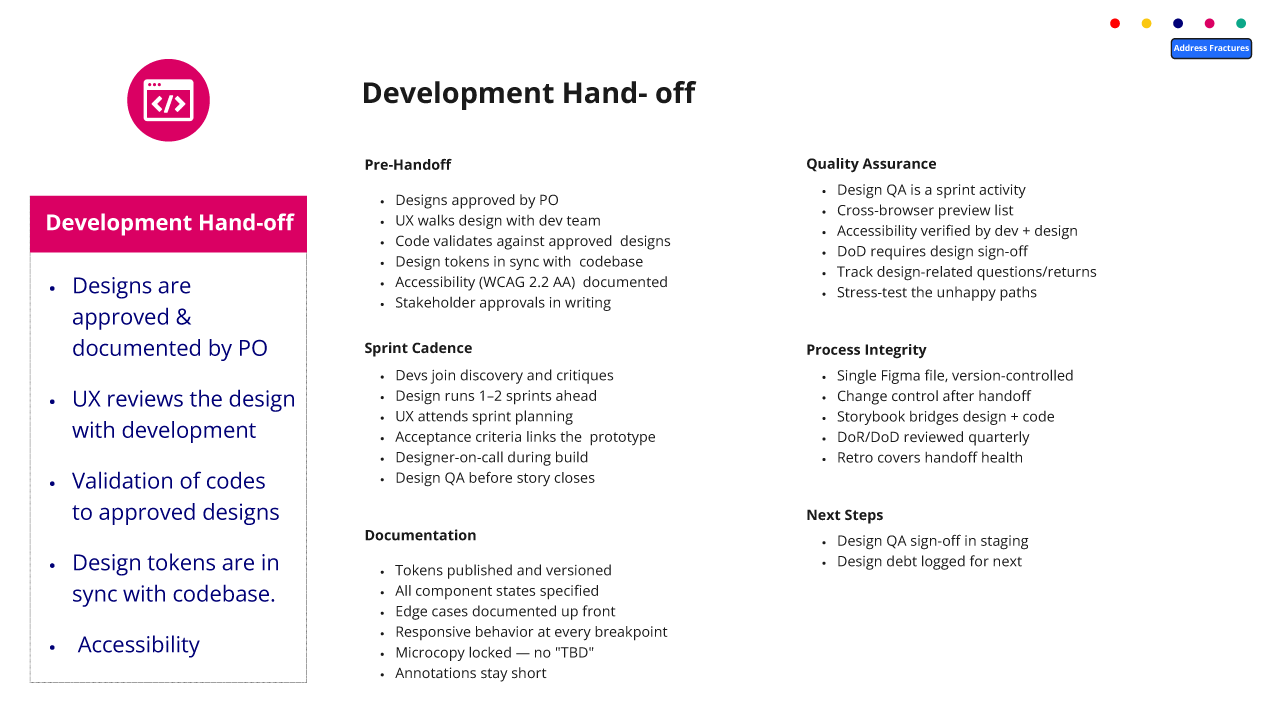
Dev Handoff

Spec delivery, engineer review, QA support, design sign-off.

05

Review & Retrospective

Sprint retro, backlog refinement, metrics review, quarter reset.

STRATEGY

Focusing first on what's important

Before any UI work could happen, the team needed a shared model for how UX would operate. I focused entirely on role architecture and process design — the infrastructure that makes design work possible at scale..

Quarter Product Flow — The Operating Model

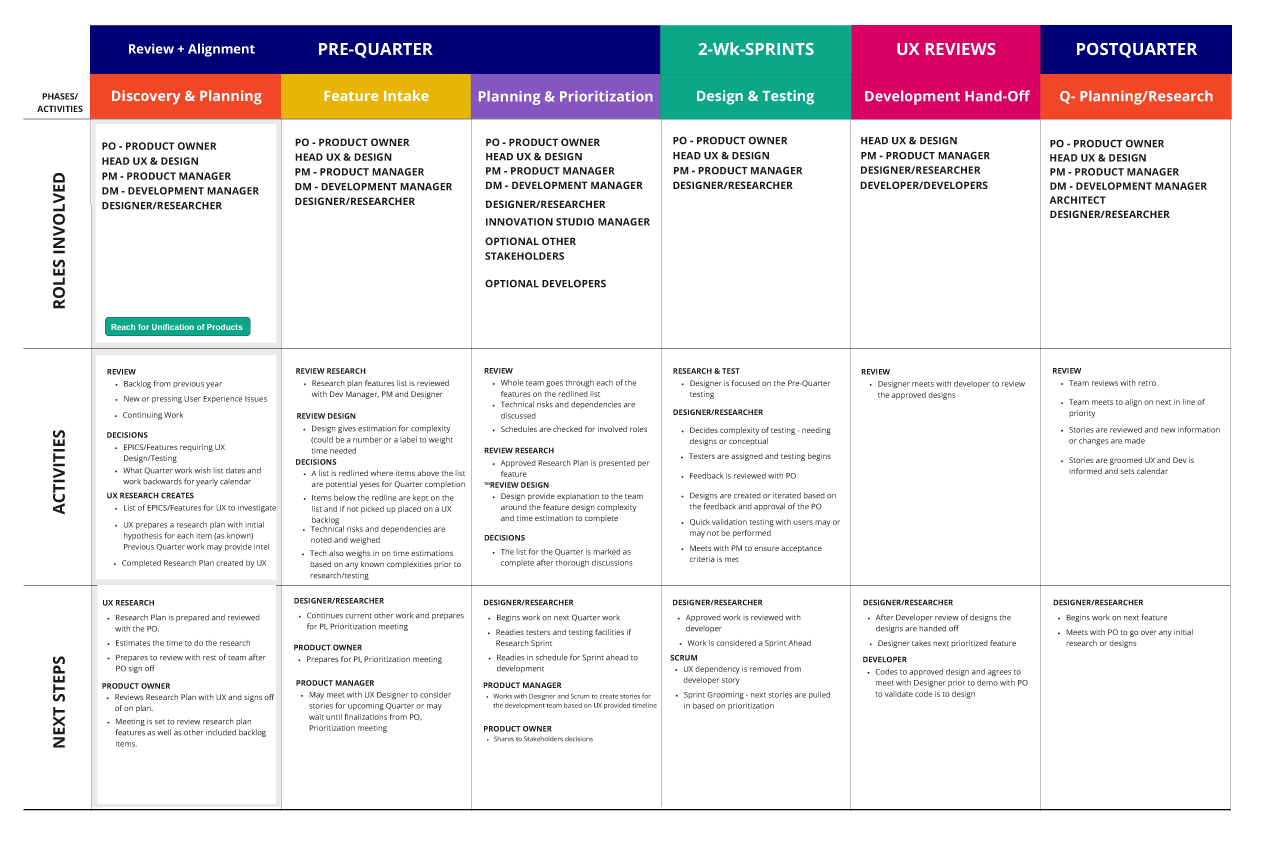
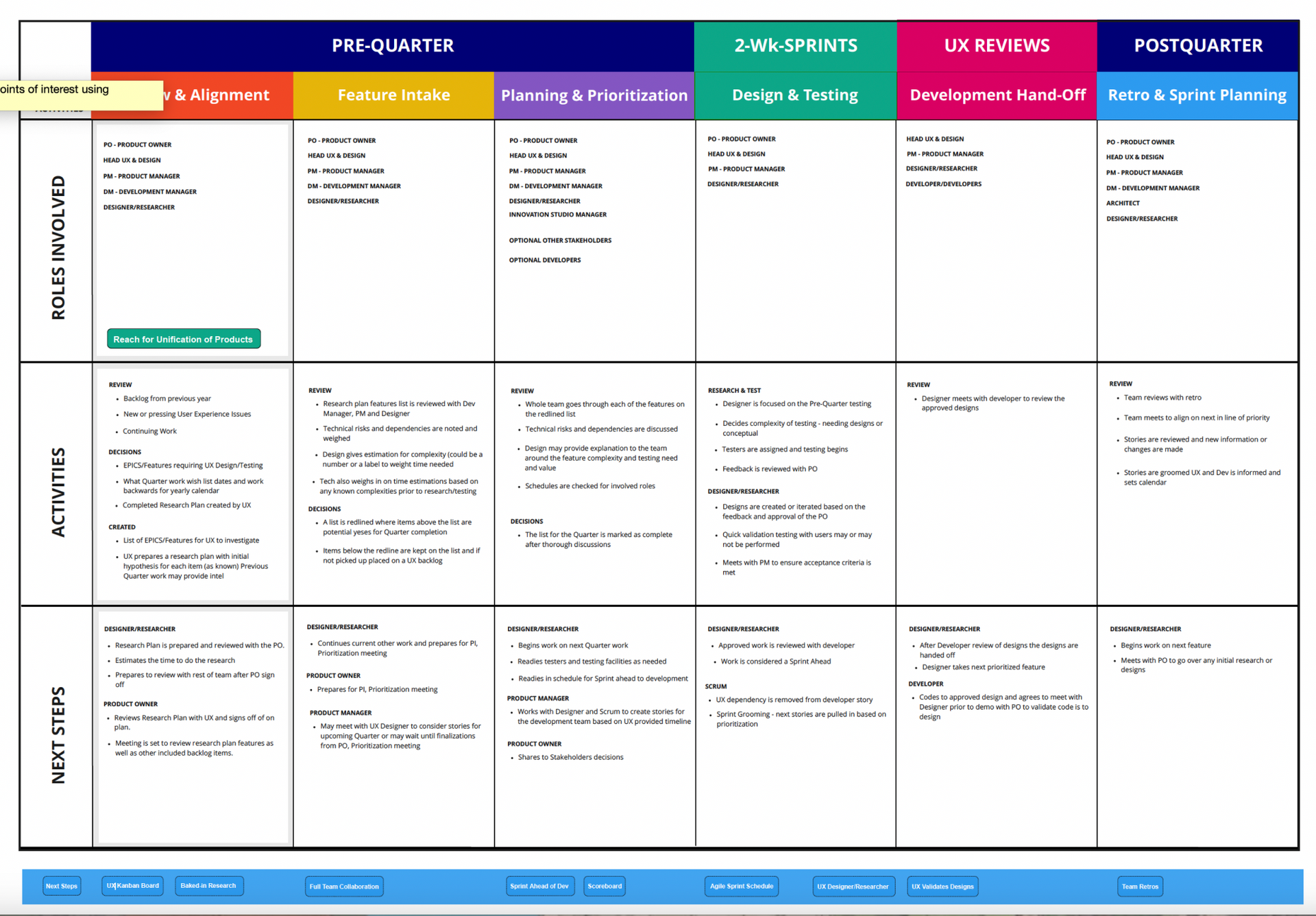
I created a comprehensive process diagram showing the cyclical nature of how an efficient UX team functions — from Pre-Quarter alignment through Feature Intake, Planning & Prioritization, Design & Test Sprint Cycles, Development Hand-Off, and Retros.

Detailed Quarterly matrix

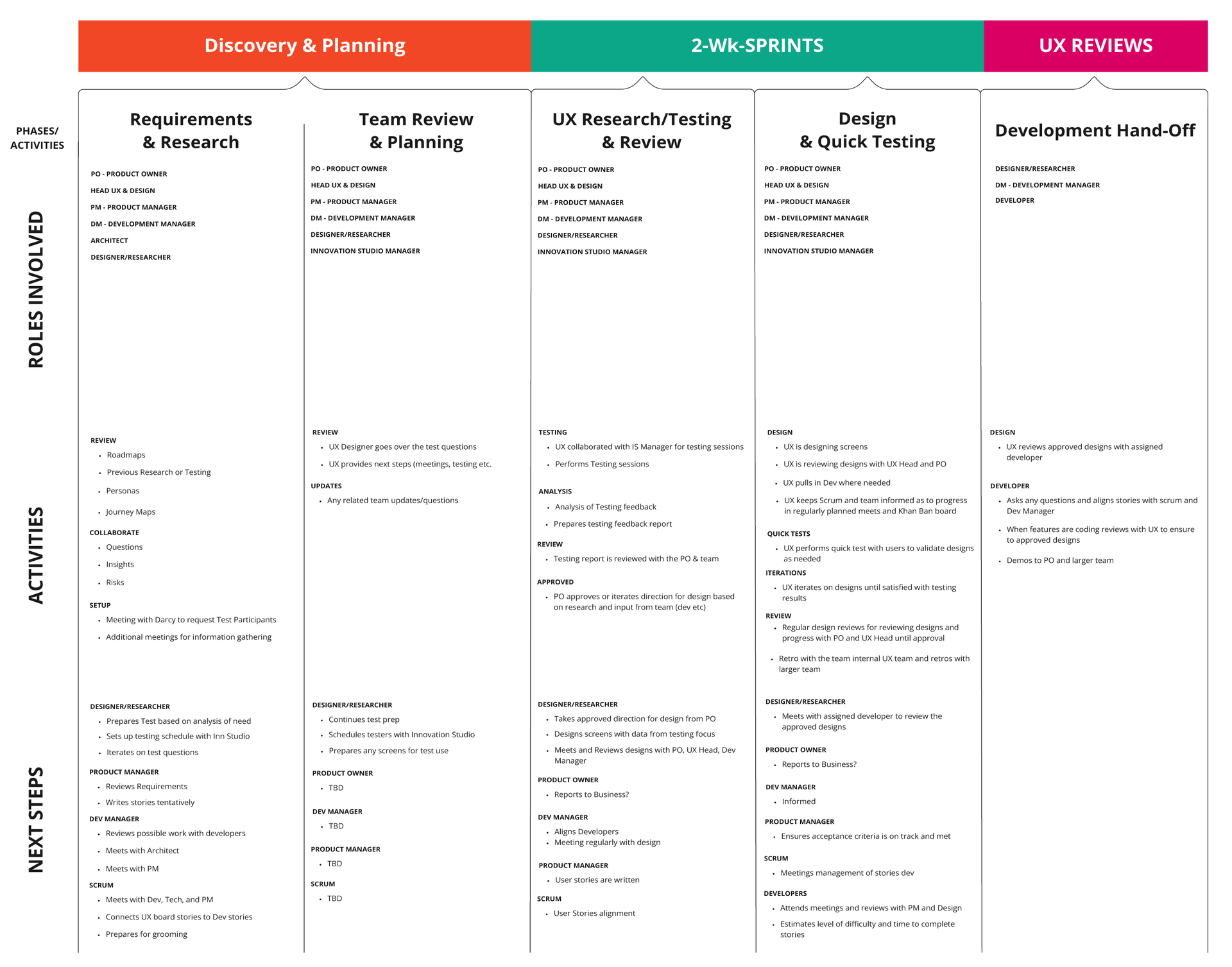
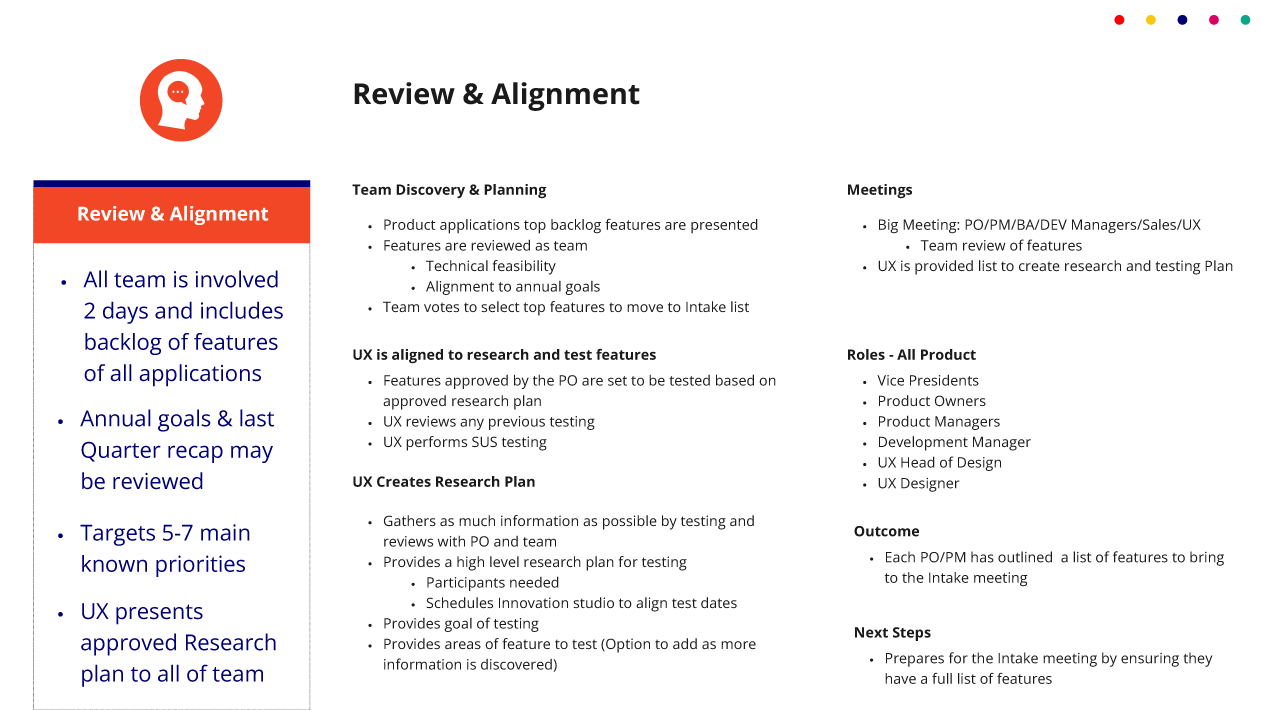
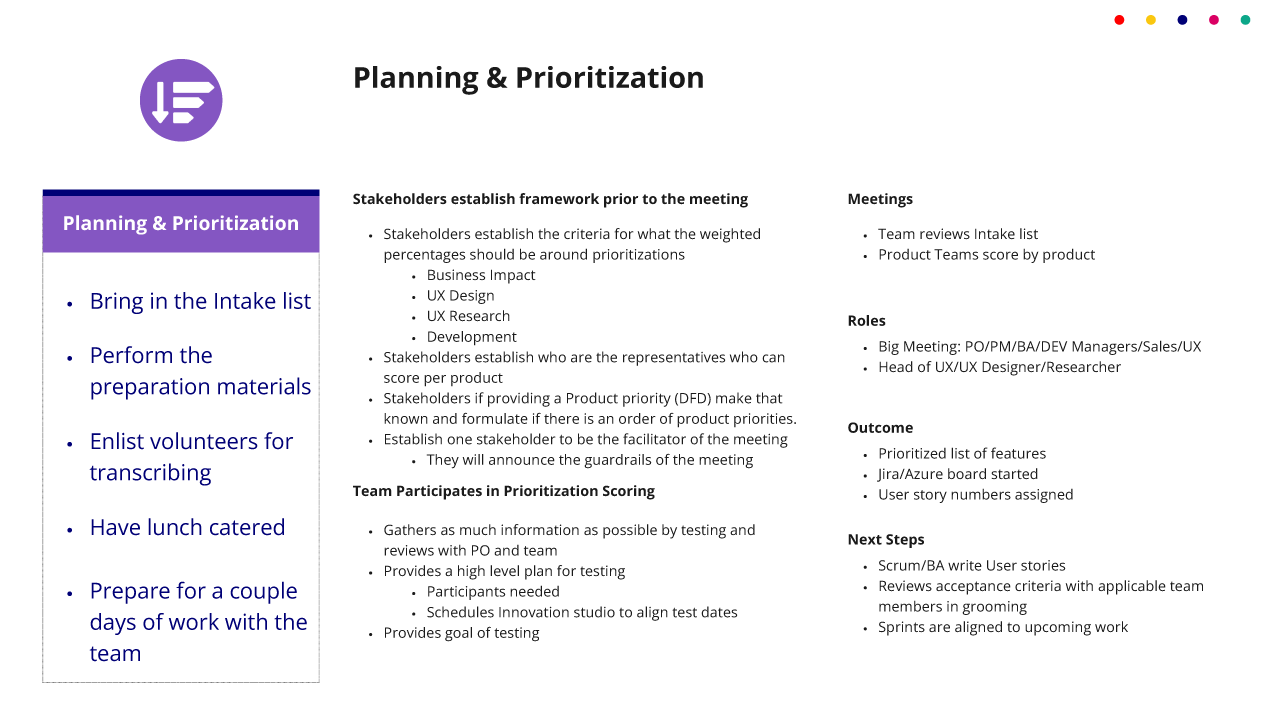
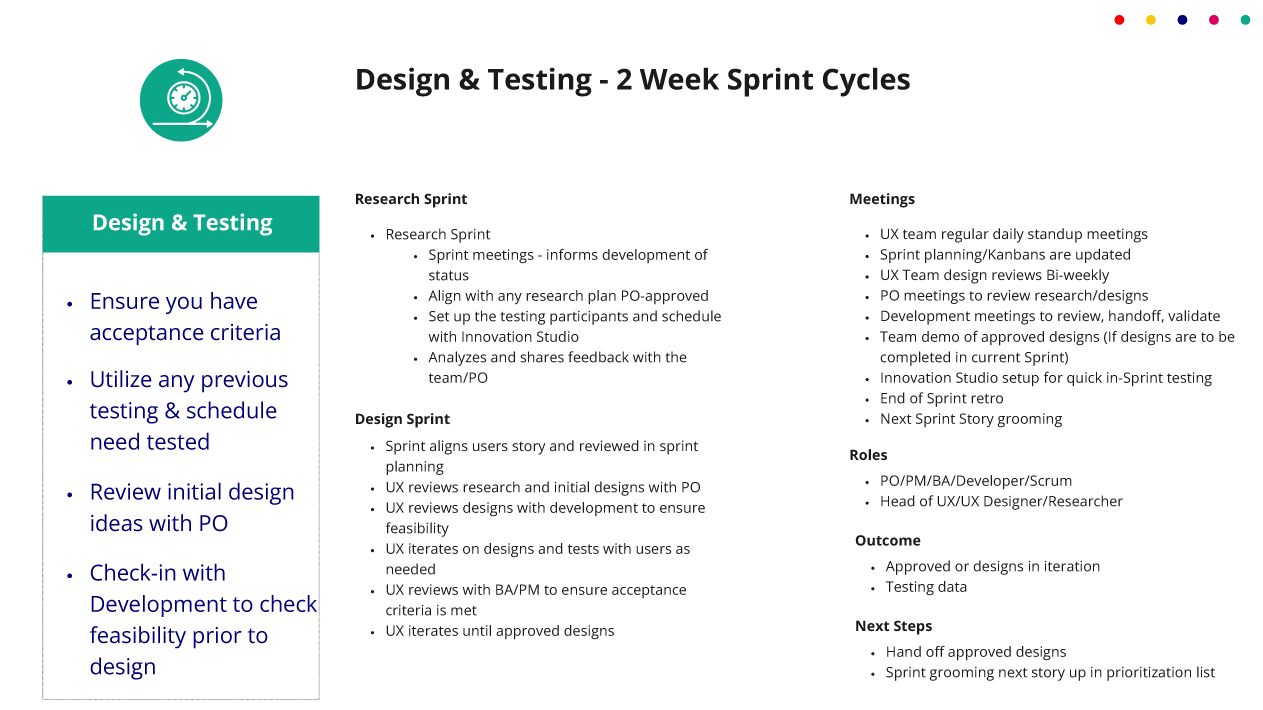
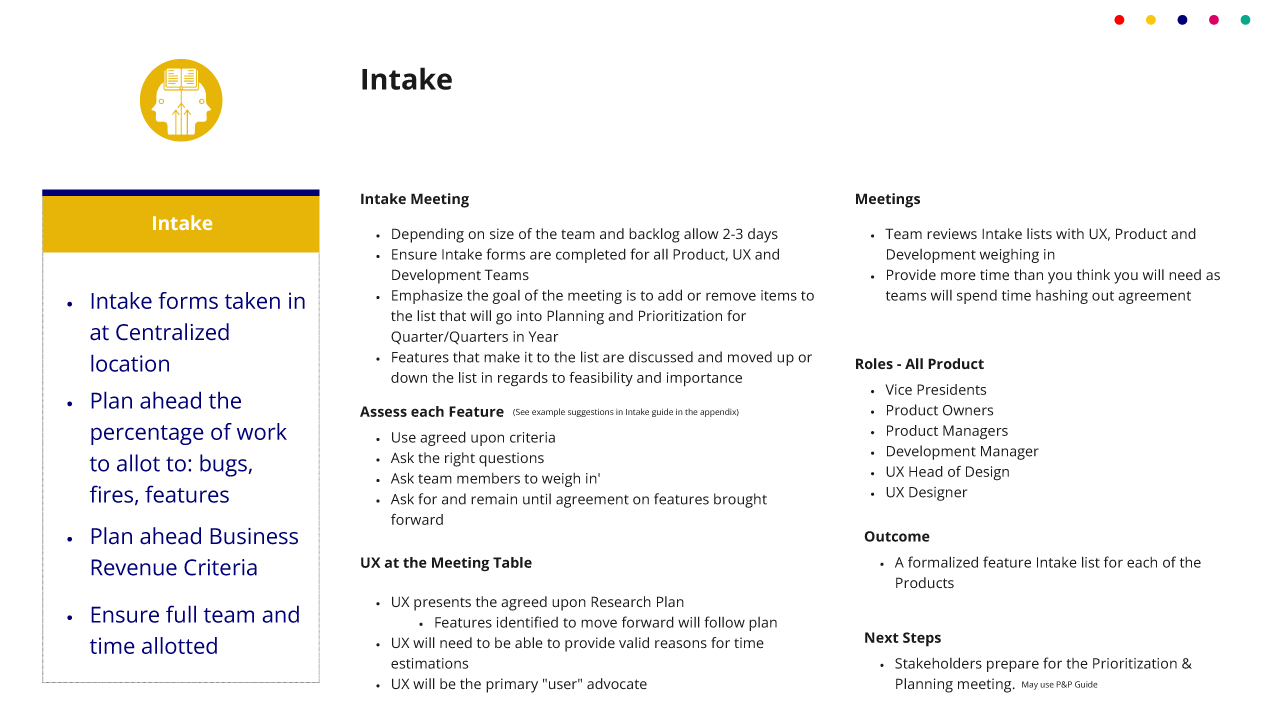
A single flow diagram wasn't enough. I created detailed quarterly matrices to guide the UX Director on which activities and meetings each team member should participate in across every sprint phase of the quarter.


DELIVERY

Delivery - Calendars

I wanted to make sure our clients had a guide for planning for their quarters and sprints and the inevitable issue they would need ti iterate with to be successful through product delivery.


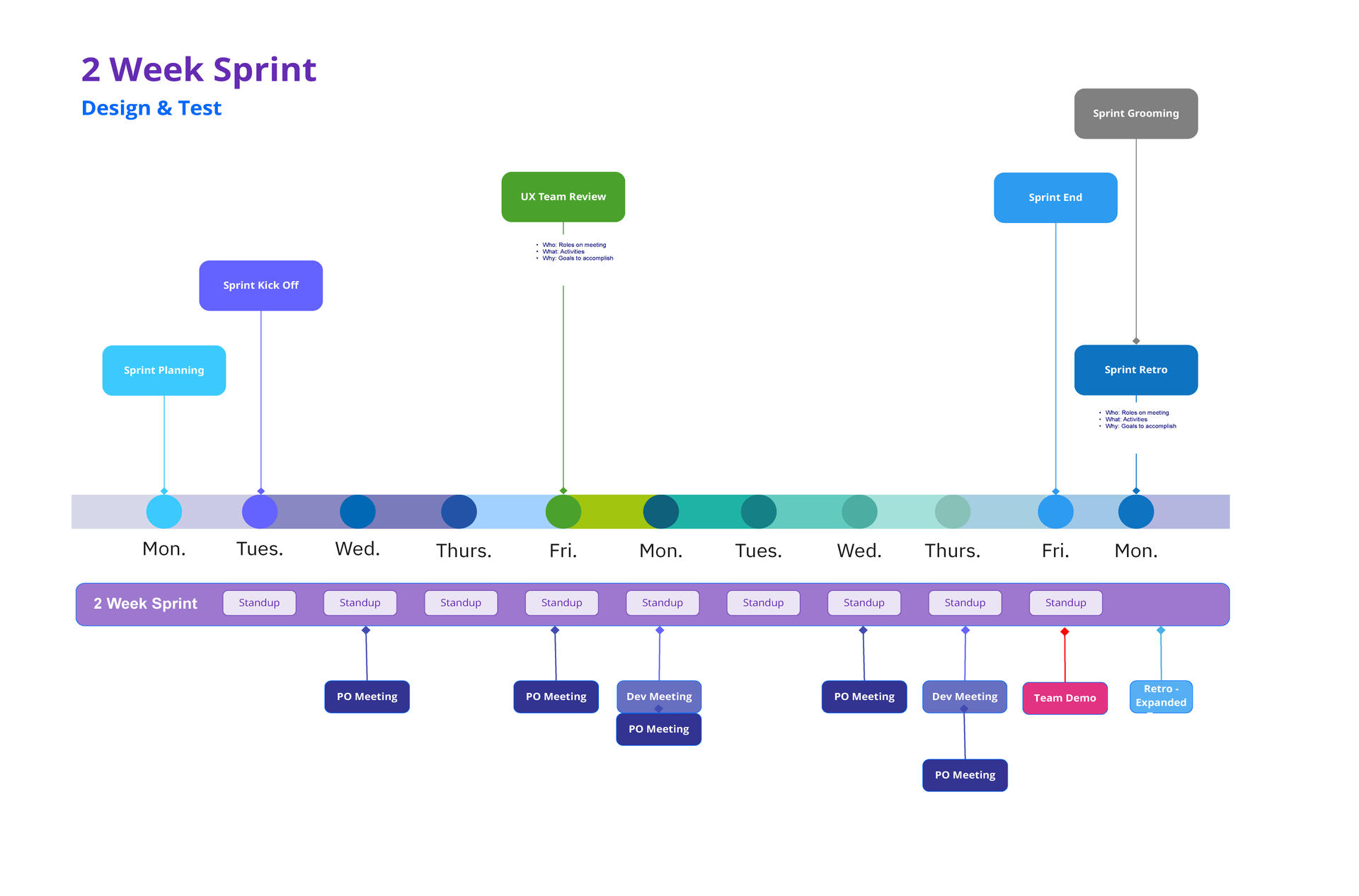
Quarterly to 2 Week calendars

The team dynamic was looking great and the new UX Manager and Director had been thoroughly educated. I wanted to leave them with concrete calendars to guide them on their path.

More Tools for Independent Operations

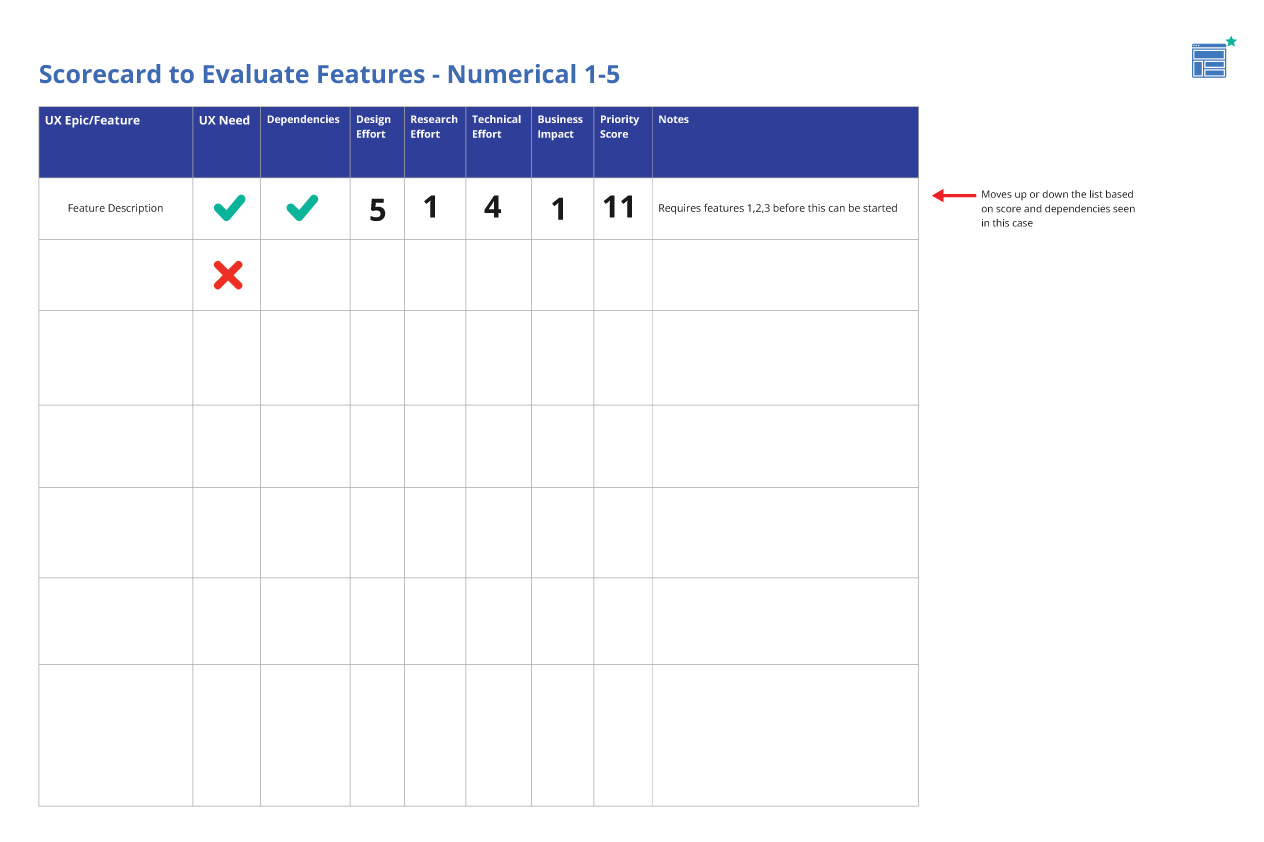
Evaluate Features Template

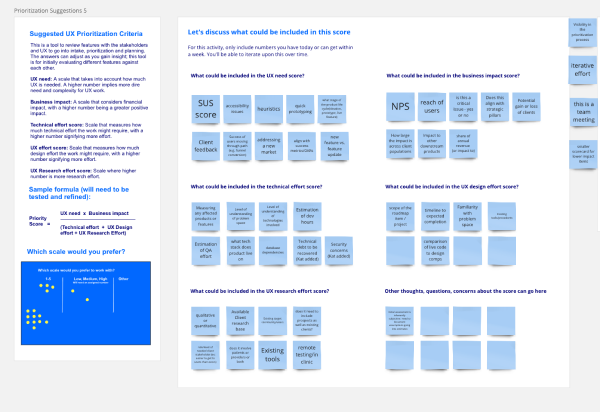
The new UX team would need to evaluate features to prioritize them. A score card typically used by engineering teams to analyze the difficulty and time needed to complete work was utilized prior to roadmapping quarterly and sprint work.

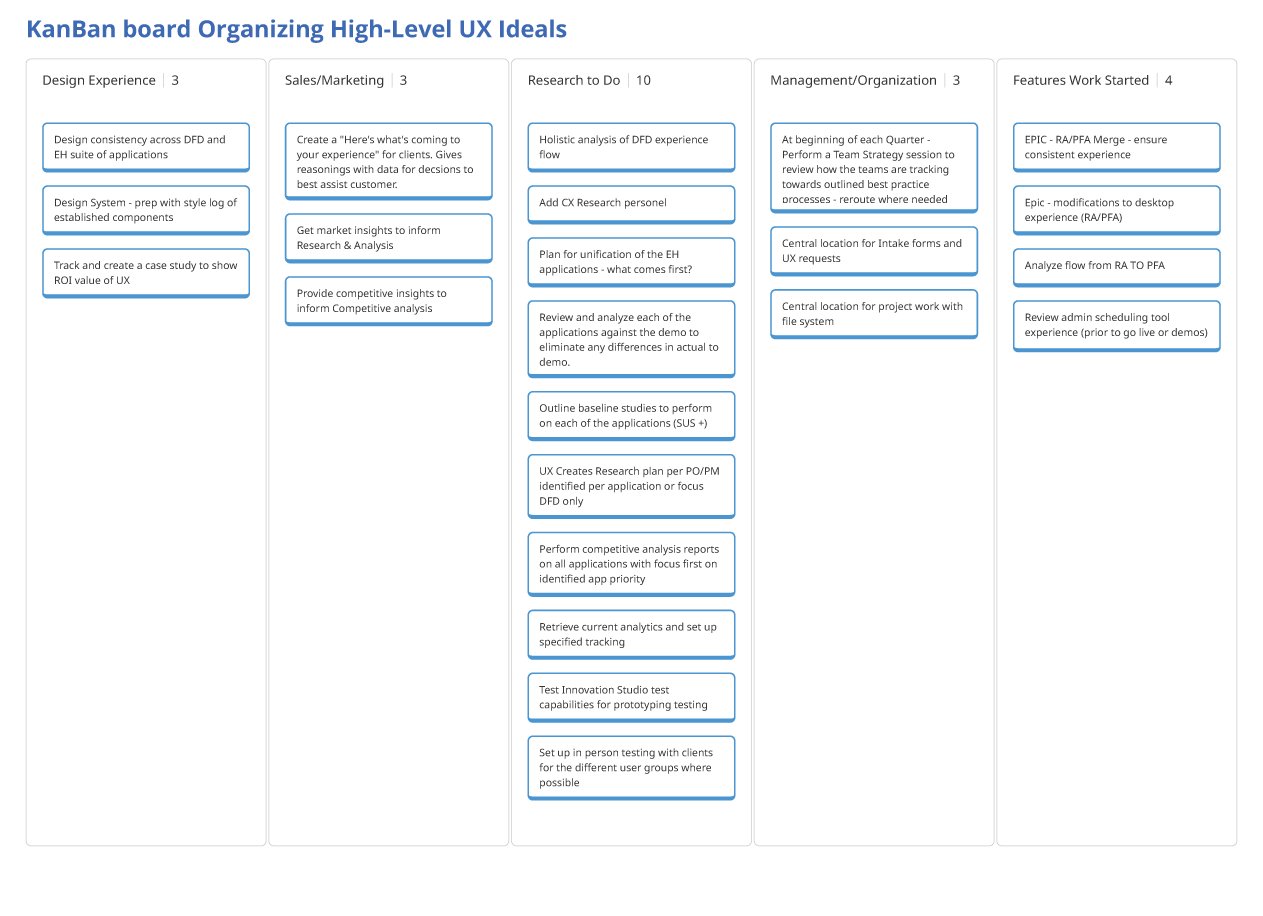
Kanban  Board Template

Producing the first Kanban board together with the team helped them to see how to utilize to their advantage for keeping the priorities and organization of features organized.

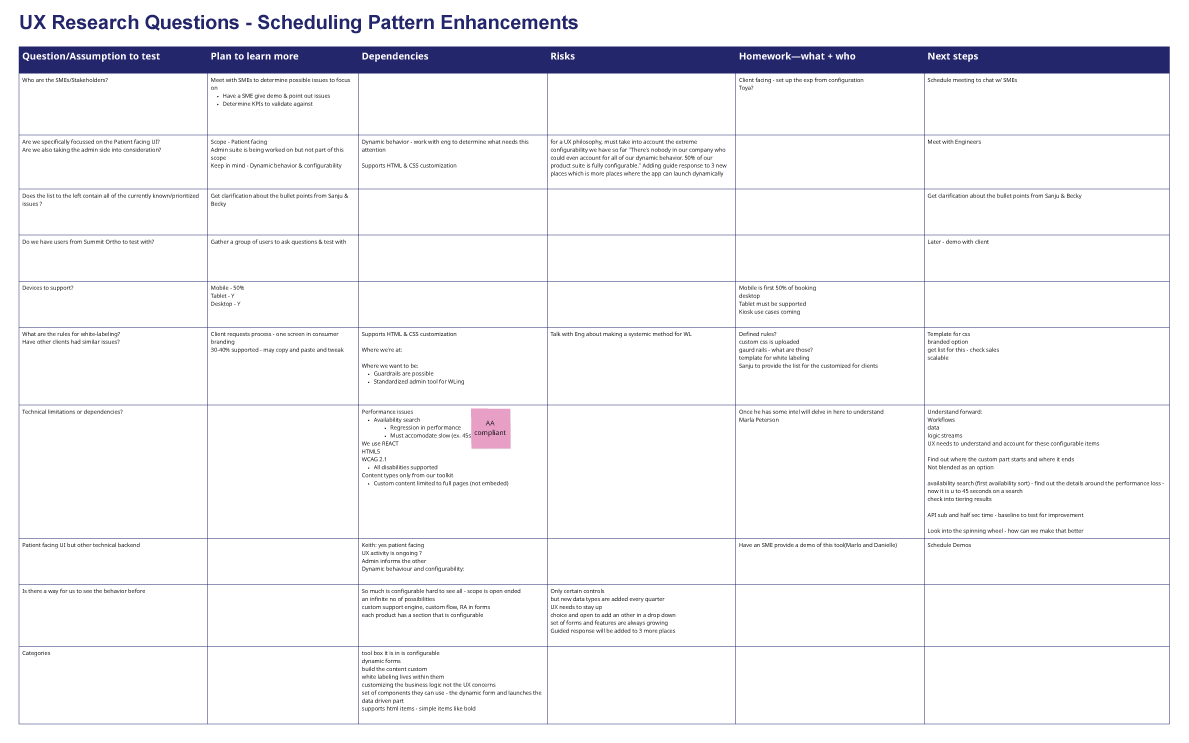
Evaluating Research Opportunities

The value of research was adopted quickly when we brought the collaboration of the engineering and Product Owners into the UX discussions with stakeholders.

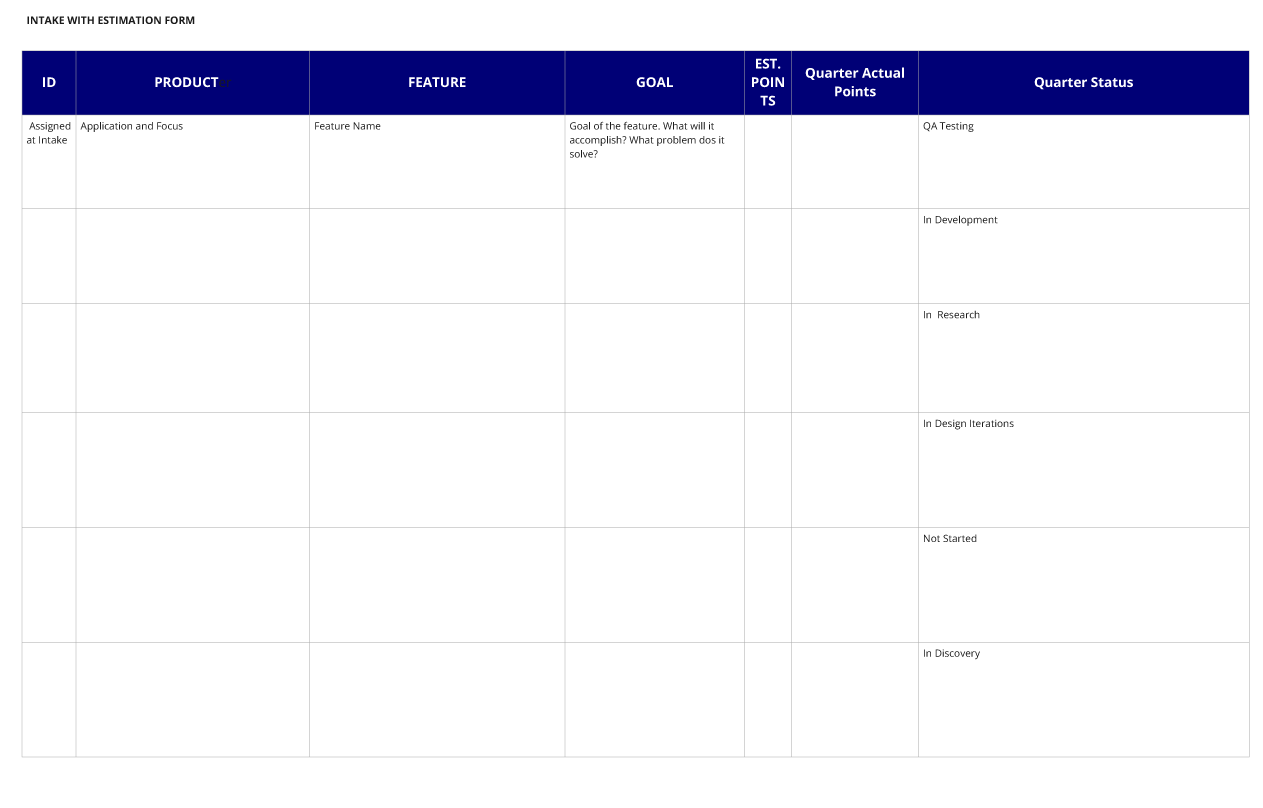
Intake Process Form Template

The new UX Manager would need to stay on top of the features and to be delivered by a method of intake where the Product Owners would be required to meet with UX and engineering and file the required forms with the UX Manager prior to their features and projects being scheduled.

Six detailed phase guides mapping roles, activities, meetings, and expected outcomes — a personal how-to guide for every team member inside the new UX model.

DELIVERY

Playbooks for every phase & role

Crawl

DAYS   1 - 90

Establish the foundation. Align stakeholders, understand user needs, and create early momentum through focused discovery and quick wins.


Launch the UX intake and prioritization process

Clarify UX ownership, roles, and decision-making responsibilities

Pilot the new workflow with a single product team

Establish baseline UX and product performance metrics

Create early success stories to build organizational momentum

Walk

MONTHS  3 - 6

Expand and standardize. Scale the UX practice across teams, implement consistent processes, ad build the systems that enable effeciency.


Expand the process across additional product teams

Establish the Design System foundation

Standardize UX artifacts, templates, and workflows

Introduce governance and review checkpoints

Begin tracking UX performance metrics consistently

Run

MONTHS  6 - 12

Drive impact. UX leads strategic decisions, research informs the roadmap, and measurable outcomes demonstrate business value.


Enable UX leads to participate in roadmap planning

Use research insights to influence product strategy

Connect UX outcomes to business and customer metrics

Report measurable ROI to leadership

Evolve UX into a strategic business capability

adoption

Protecting Momentum 

Building Social Proof First

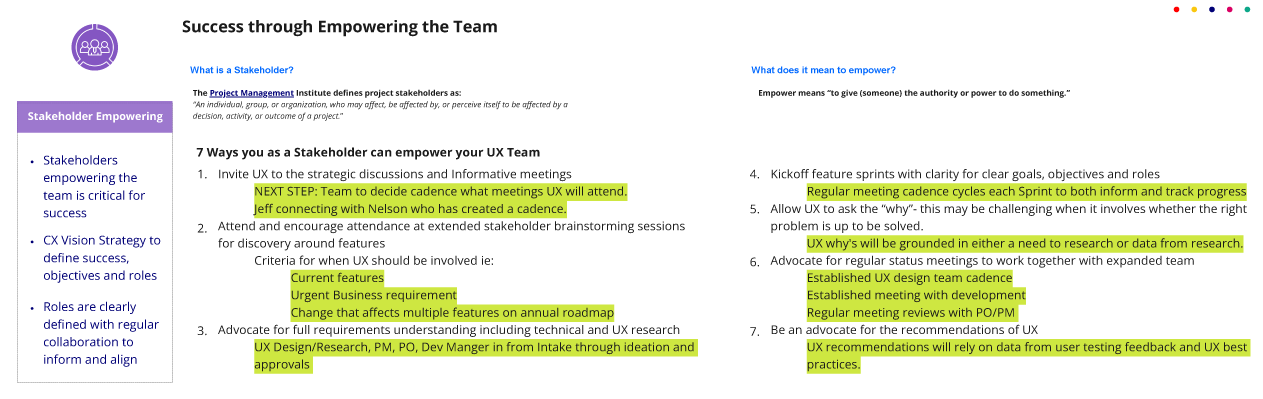
Most Product Managers were cautiously willing to try the new handoff model. I gave them a clear intake template and a working sprint example so they could see the process functioning before committing to it fully.


Within the first week, two PMs were routing work cleanly through intake and seeing faster turnaround — creating social proof that pulled others forward without pressure.

Navigating Resistance

One senior PM continued bypassing intake. Rather than confront publicly, I isolated the influence before isolating the person — keeping the majority moving while addressing resistance in parallel.


A 1:1 revealed the real issue: not stubbornness — loss of control and timeline anxiety. I walked through a live example. When behavior still didn't shift, I aligned with the UX Director to make intake the official standard.


Change Management Strategy


Step 1: Build Social Proof First

Move the willing majority forward visibly. Early wins create gravity that resistant individuals can't ignore.


Step 2: Diagnose First

Resistance is usually about loss of control, not bad intent. Understand the fear before addressing the behavior.


Step 3: Show, Don't Tell

A live working example does more than an email. Make the new process less threatening through experience.


Step 4: Align with Leadership

When behavior doesn't shift after direct engagement, escalate through the right channel — calmly, with documentation.


The most impactful UX work isn't always a redesign —

sometimes it's redesigning how the team works.


Impact, Leadership & Outcomes


Every organization is different. This one needed structure, not spectacle. As UX Lead, I transformed a fragmented design function into a structured, accountable UX practice — in under six months, in a regulated healthcare environment.


•  Diagnosed current state through structured interviews and workshops across all product teams

•  Delivered a complete UX process model — pre-quarter through development hand-off

•  Created 9 detailed phase guides mapping roles, activities, meetings, and outcomes

•  Built a prioritized design backlog with scheduling and UX estimation framework

•  Established a phased 90-day to 12-month growth roadmap tied to KLAS metrics


•  Facilitated beta test teams — bringing siloed individuals together for the first time

•  Product Managers transitioned back to strategic ownership as intake took hold

•  Navigated organizational resistance through social proof, 1:1 diagnosis, and leadership alignment

•  Delivered a scalable foundation — processes and templates designed to outlast the engagement

•  UX Manager and Director reportedly confidently growing ad managing the team and product delivery